European Development Projects
2022-2024 / NAIP: DaDOM
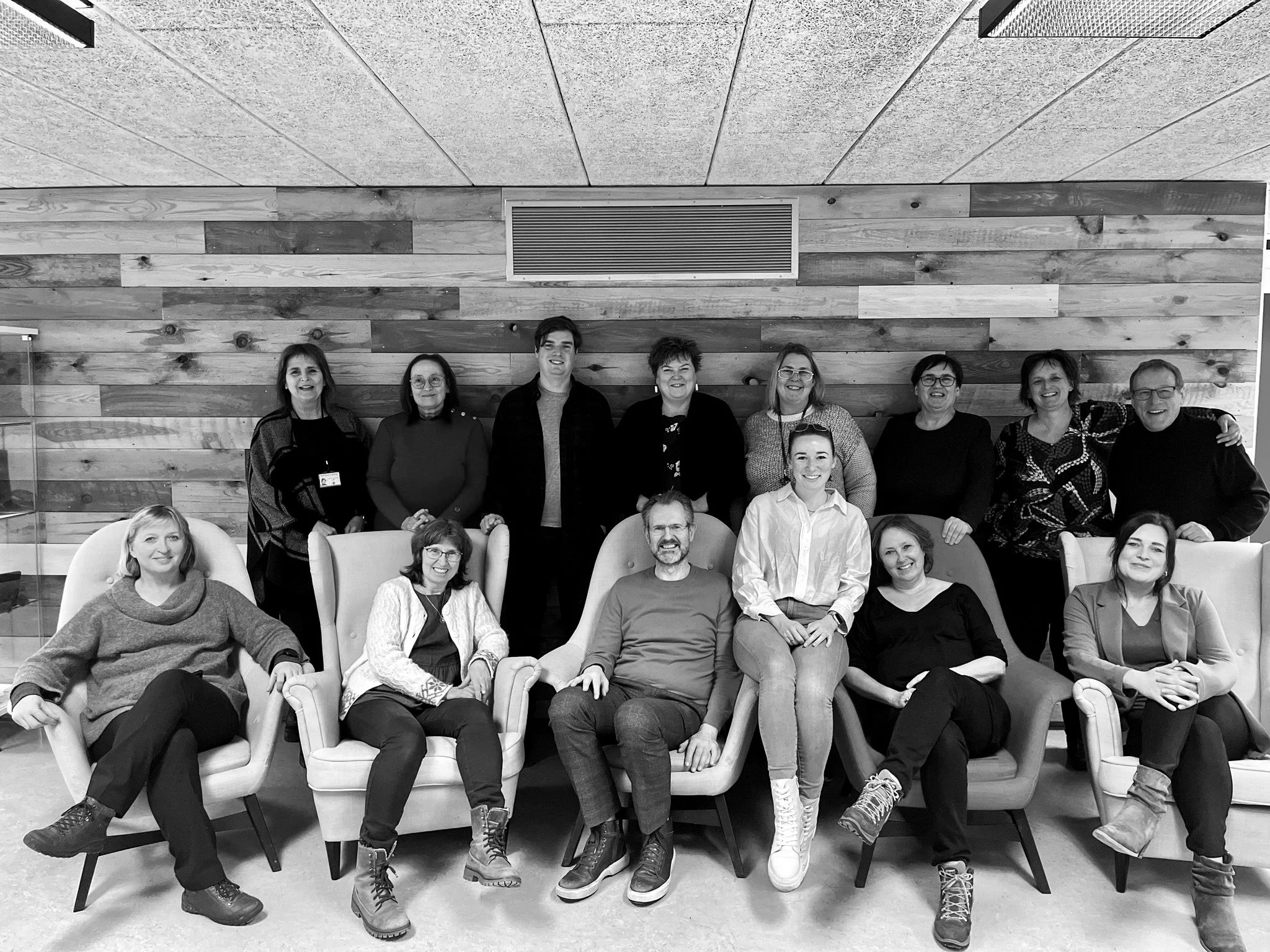
DaDOM, an Erasmus+ project, was designed to integrate music into caregiving practices, showing remarkable effects on well-being for residents and caregivers alike. Musical interactions improve sleep, encourage communication, and ease behavioral challenges—especially valuable in dementia care. For care staff, the confidence gained in using music fosters a more enjoyable and connected working environment, proving to be a powerful tool in daily care routines.
See more: https://www.dadom.eu
2018 - 2021 / NAIP: BAD (Beyond Art Disciplines)
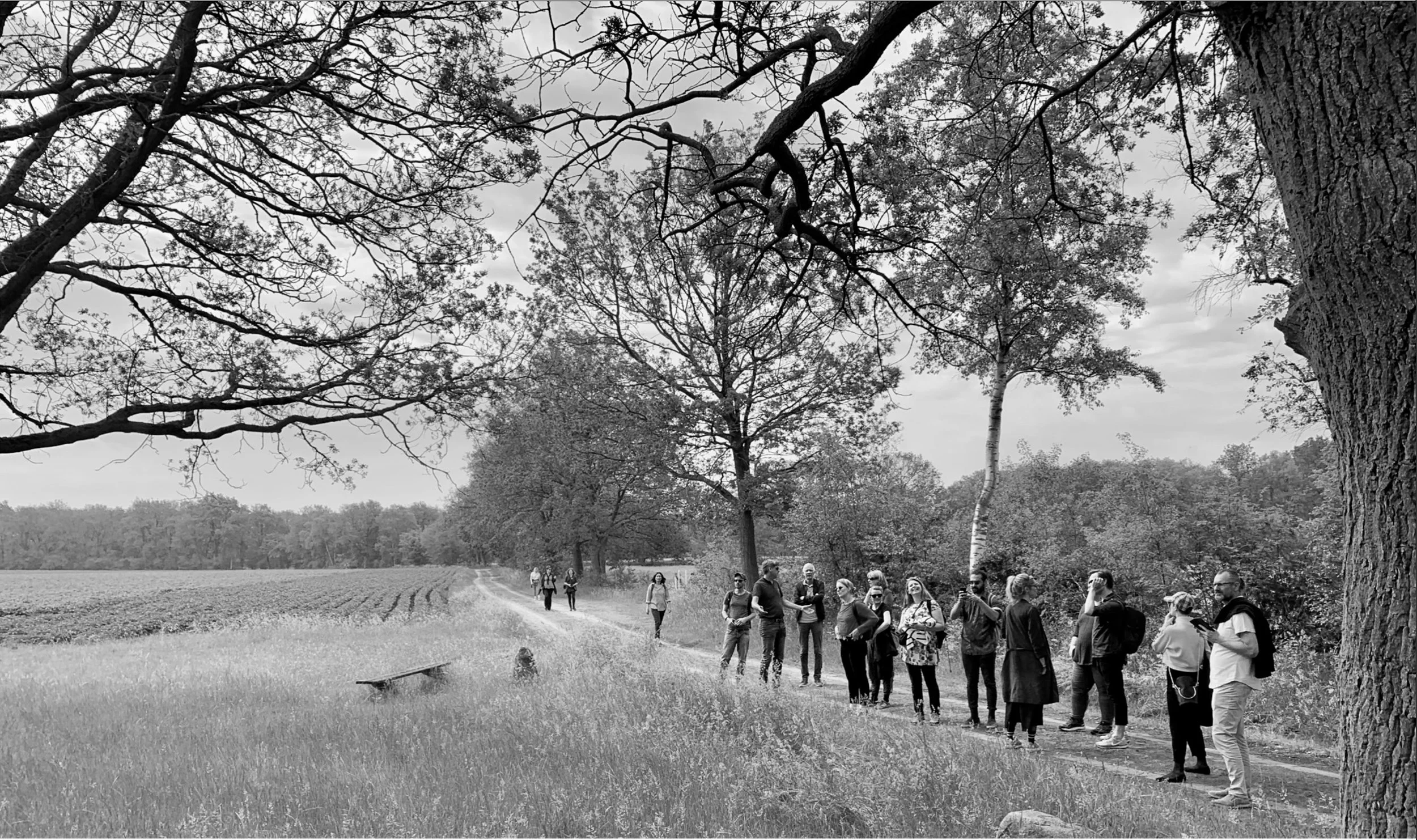
The concrete Intellectual Output aimed at creating a map of case studies exemplifying best practice in the international field of transdisciplinary art.
The Intellectual Output gave insight into a range of artists, contexts, and institutions who had, each in their own way, dealt with how different fields of practice and art could benefit from crossovers and significant disciplinary blurring. The aim was to create an online resource that could be accessed by anyone interested in engaging further with the field of transdisciplinary art practices, and which would serve as a platform to be drawn upon for inspiration, concrete tools and approaches, theoretical insights, as well as areas for future innovation and development.
This output was intended to serve as a learning resource for students, professional artists, teachers, as well as professional and educational art institutions, and to point towards new areas of possibility for further artistic, educational, and societal innovation.
For further information and material contact NAIP program director at Iceland University of the Arts.

The NAIP collaboration has been active in curriculum development projects along with associated partners, and received funding from the Erasmus+ Programme for the activities. Before the launch of the new Erasmus+ Programme in 2014 the consortium received numerous grants Erasmus Lifelong Learning Programme to fund the NAIP Intensive Programmes, which have been held since 2009. Information on current and past projects can be found below, and updates on current projects can be found here.
2016-2018 / NAIP: Training Artists Without Borders
In 2016, the NAIP collaboration initiated a new Strategic Partnership, funded by the Erasmus+ programme with the title NAIP: Training Artists Without Borders. The project started in autumn 2016 and will finish in autumn 2018.
The project is coordinated by Iceland Academy of the Arts and the project partners are Guildhall School of Music & Drama, London, Stockholms konstnärliga högskola, Stockholm, Universität für Musik und Darstellende Kunst, Vienna, Koninklijk Conservatorium, The Hague, Pins Claus Conservatorium & Academie Minerva, Groningen, Yong Siew Toh Conservatory of Music, Singapore, Association Européenne des Conservatoires, Académies de Musique et Musikhochschulen (AEC), and the Icelandic Opera, Reykjavik.
This project aims at the modernisation of curricula and learning environment, through an interdisciplinary dialogue between higher education in music and performing arts. The discourse will take place within a consortium, consisting of three institutions offering the NAIP programme (European Music Master for New Audiences and Innovative Practice), four higher educational institutions offering training in music and/or performing arts, as well as a professional partner in the field of performing arts.
This project presents the opportunities offered by cross-border and cross-art collaboration as a tool for curricular innovation, with active participation of academics and students in the field of music and performing arts, as well as players from the professional field. The project's progress and results will be widely disseminated, thereby making a significant impact on higher education in the fields of music and performing arts in Europe and beyond.
This partnership project consists of several activities over a two-year period, focusing on developing:
Cross-art modules
Mentoring as a tool for innovation, professional integration and talent development
Online learning approaches
The activities will be in the form of two cross-art intensive study programmes, two blended mobility courses, three working groups, a joint staff training event and a staff development seminar. The activities of the project are designed to develop new and sustainable curriculum structures, both in the physical as well as the virtual classroom, exploring the possibilities of new cross-art joint modules. The project utilizes the international conversation and cross-fertilization in the partnership to enhance curriculum development, and create new approaches for creative collaborative learning in a cross-art setting. The project explores the advantages of an active dialogue between the professional field and higher education, as well as sharing and learning through a critical discourse between academic staff members of music and performing arts.
This project builds on experiences gained through previous partnership projects, which aimed at the development of creative collaborative learning in higher music education, emphasising enhancement of personal skills, self-confidence, community engagement, collaboration skills, improvisation, peer evaluation and reflection. In today’s professional environment of artists, the boundaries between subjects of art are becoming more and more blurred. As it is now apparent that interdisciplinary skills are an inseparable part of working in the professional environment of music and performing arts, the higher education institutions must respond to the students' needs to train in a cross-art learning environment. This project responds directly to this need, offering both teachers and students the opportunity to engage in interdisciplinary discourse and activities.
2014-2016 / NAIP: Innovation in Higher Music Education
Further Information and Project Results
During the years 2014-2016 the project “NAIP: Innovation in Higher Music Education” received €246.623 from the Erasmus+ programme. This two year strategic partnership aimed at the modernisation of curricula, and teaching and learning approaches in higher music education through a further development of the European Music Master for New Audiences and Innovative Practice (NAIP). The programme was at the time available at Royal Conservatoire The Hague, Prince Claus Conservatoire in Groningen, Iceland Academy of the Arts and Royal College of Music in Stockholm. In addition, the following conservatoires participated in the project; Guildhall School of Music and Drama London, Norwegian Academy of Music, Helsinki Metropolia University of Applied Sciences, University of Music and Performing Arts Vienna and the National University of Singapore. Association Européenne des Conservatoires, Académies de Musique et Musikhochschulen participated in the project as an external evaluator and helped with disseminating the project’s results.
The traditional conservatoire system is built on the assumption that the pathway of each graduating student is known beforehand, with a steady stream of orchestral players, soloists, composers, instrumental, theory or classroom teachers. Today, those traditional jobs for musicians are a much smaller part of the whole picture. The majority of musicians of today are entrepreneurs or independent portfolio artists who have created their own carrier or are combining their independent carrier with a traditional part-time job. In the world we now live, we are tackling other barriers than before. Access to information is, with all the new technology, without any difficulties whatsoever. This means that education, including higher education, needs to aim more at personal strength, experience and adaptability then just supplying information and training.
The European Master of Music for New Audiences and Innovative Practice (NAIP) programme was developed to address these and other issues, such as the enhancement of personal skills, self-confidence, community engagement, collaboration skills, knowledge of diverse styles in music, improvisation, peer evaluation, reflection etc., now increasingly known as creative collaborative learning.
The strategic partnership focused on developing new content and sustainable structures for the NAIP training programme in terms of curriculum, mobility and recognition. It developed expertise in the field of new audiences & innovative practice, especially with regards to the pedagogical knowledge and skills of the NAIP teachers, as well as to strengthen the position of the NAIP philosophy in regular training programmes. The project aimed at developing and spreading the ideology of the creative collaborative learning methods that address the above mentioned issues, with the aim of increasing collaborative composition, improvisation, practice based research and building up personal skills in traditional study programmes.